DSTV is one of those systems people forget about until it stops working. Then it’s urgent. Then it’s never urgent again until next time. Here’s a simple maintenance rhythm that prevents most of the panic calls we get across Franschhoek and the Cape Winelands.
Every 6 months: visual check
Look at the dish from the ground. Is it still pointing the same direction? Are there leaves or debris caught behind it? Has a creeper started growing along the cable? Is anything visibly loose? This 30-second check catches 80% of the slow-burning issues before they become problems.
Annually: full system check
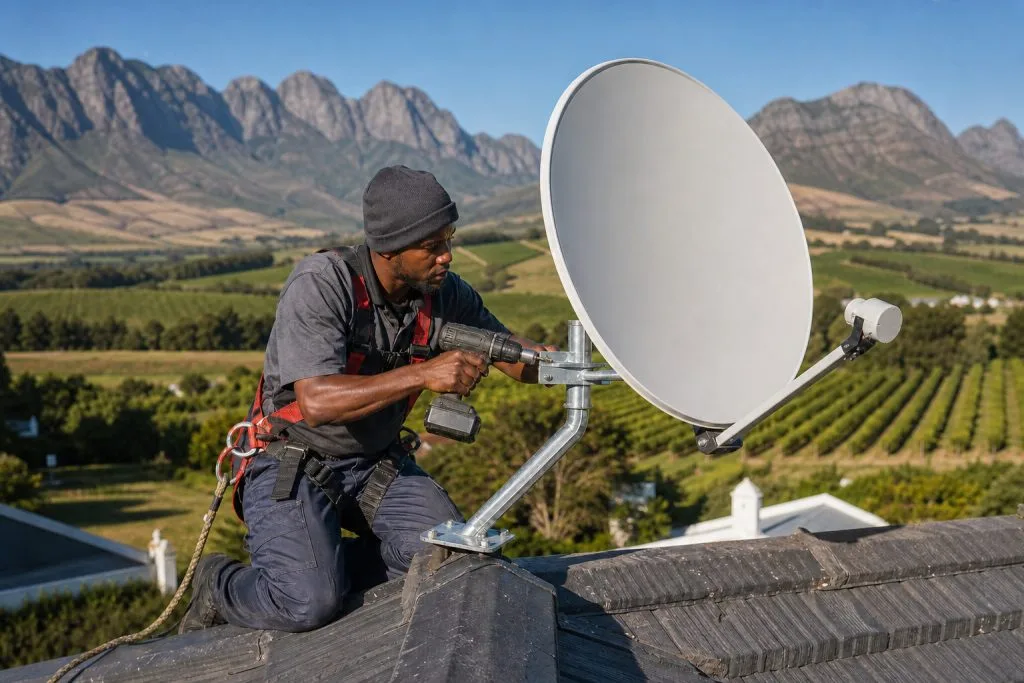
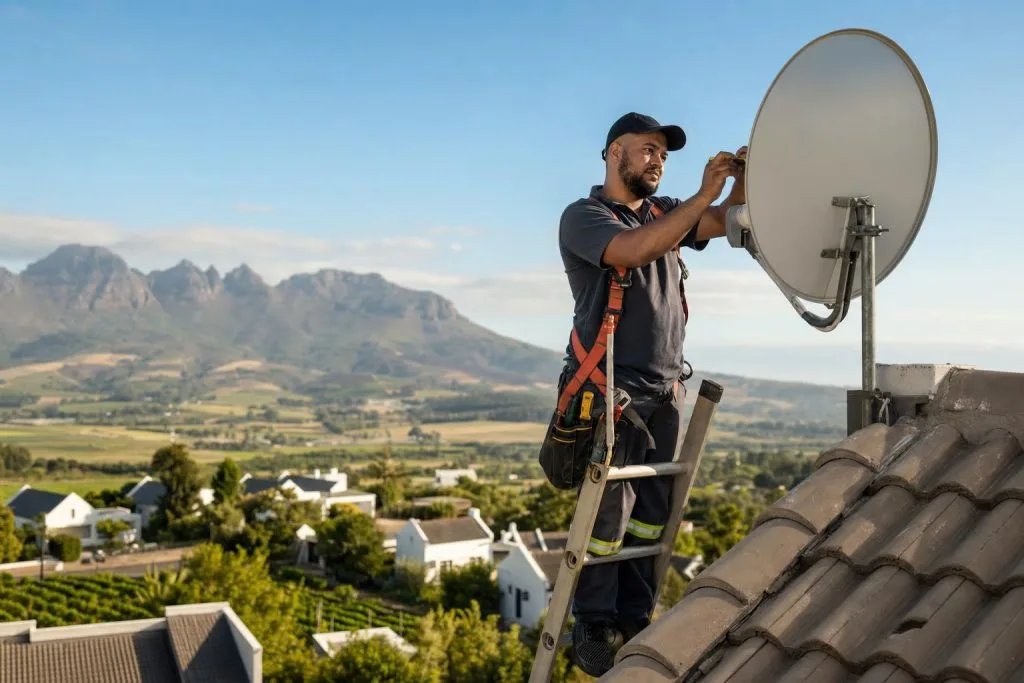
Once a year, ideally before the wet season hits (May–June in the Winelands), it’s worth having a technician do a proper walkthrough: signal levels on the meter, F-connector seals, cable condition where it’s exposed to UV, dish bracket tightness, LNB condition, decoder firmware status. Most of this can be done in 30 minutes on the ground and roof.
This isn’t a hard sell: we don’t run aggressive maintenance contracts, but customers who do an annual check have far fewer storm-night emergency callouts than those who don’t.
After every major storm
If your DSTV survives a big Winelands storm without dropping signal, you’re probably fine. If signal dropped during the storm and came back when it cleared, also fine: that’s normal rain fade. But if signal is back but weaker, drops in lighter weather, or you start getting intermittent E48-32 errors, the storm exposed a weakness somewhere and it’s worth getting checked before the next big one. See our DSTV signal repair page.
When you change anything in the household
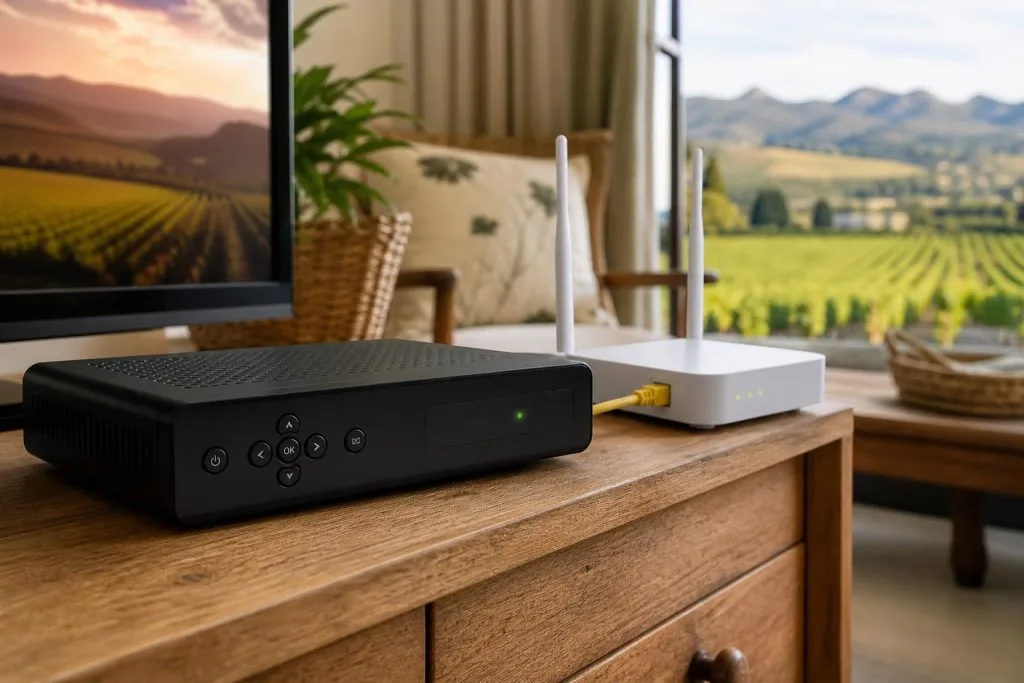
New decoder? New TV? Moved house? Renovated a wall the cable runs through? Each of these is a moment to verify everything is still working as it should. New decoders especially can introduce LNB compatibility issues: see our guide on choosing between Explora and HD.
Every 5–7 years: LNB replacement
The LNB is the most exposed component on the entire system and after 5–7 years of Cape sun and rain, it’s often the weakest link. If you’re consistently getting signal issues that can’t be traced to alignment or cable, an LNB swap usually fixes it cheaply. We bring new LNBs on every callout.
Every 10 years: full system refresh
A complete DSTV system, dish, brackets, cable, LNB, decoder, typically gives 10 years of reliable service before enough components have aged that piecemeal replacements stop being cost-effective. At that point a full refresh, ideally combined with an upgrade to Explora or Extra View, is the cleanest option. See our new DSTV installation service and our 2026 installation cost guide.
What about commercial systems?
If you run a guesthouse, lodge, restaurant or wine estate with multiple TVs, the maintenance frequency goes up significantly: we recommend a quarterly check for venues, plus active maintenance contracts. See commercial DSTV installation.
Book an annual check
If your DSTV hasn’t had a once-over in 12+ months and you’re in Franschhoek or surrounds, request a quote for a system check: typically 30–45 minutes and well worth it before the next storm season. WhatsApp 079 754 5527.
Related DSTV Troubleshooting Guides
Based in Franschhoek or the surrounding Winelands? If your DStv has stopped working rather than never worked, we diagnose the actual fault on site before quoting the fix. See our DStv signal repairs in Franschhoek, or start at our DStv installation service in Franschhoek for everything we cover across the valley. Call 079 754 5527 or request a free quote.
Need a DSTV technician?
Same-day DSTV installation, signal repair and Explora setup across Franschhoek and the Cape Winelands.