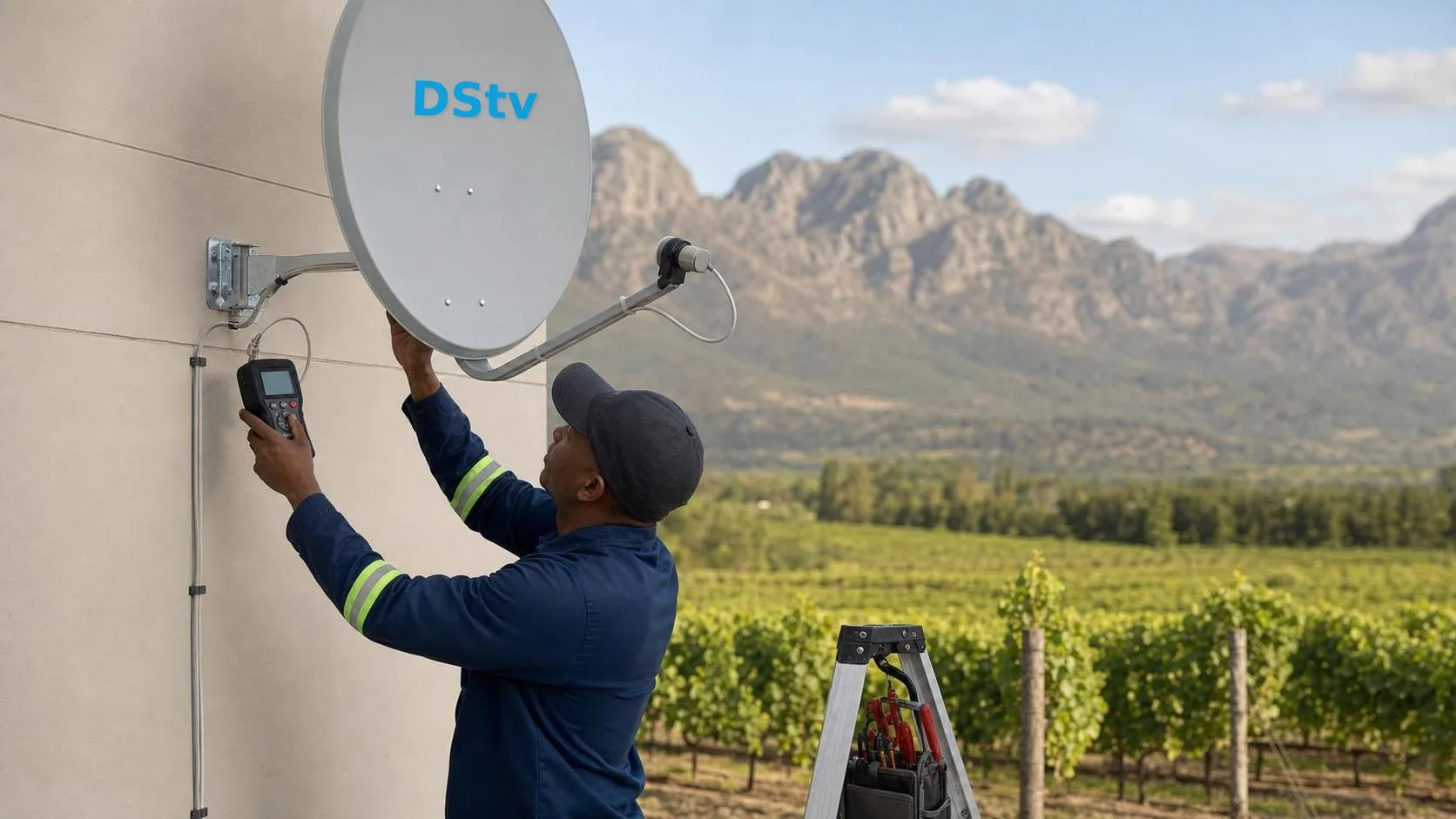
Whether it's a brand-new dish on a new build, a dish that's moved after a Cape Winelands storm, or a dish that just isn't picking up the signal it should, we install, mount, align and weatherproof satellite dishes across Franschhoek, Paarl, Wellington and the rest of the Boland.
When you need a dish installation or alignment
The usual reasons we get called out for dish work: a new house with no dish at all (covered by our new DSTV installation service), a recently moved house where the dish is still at the old address (see DSTV relocation), a dish that's been knocked out of alignment by the wind, a storm-damaged dish that's bent or come away from the wall, a poor-signal dish that was installed too low or too close to trees, or a dish that's lost weatherproofing and the LNB has rusted out.
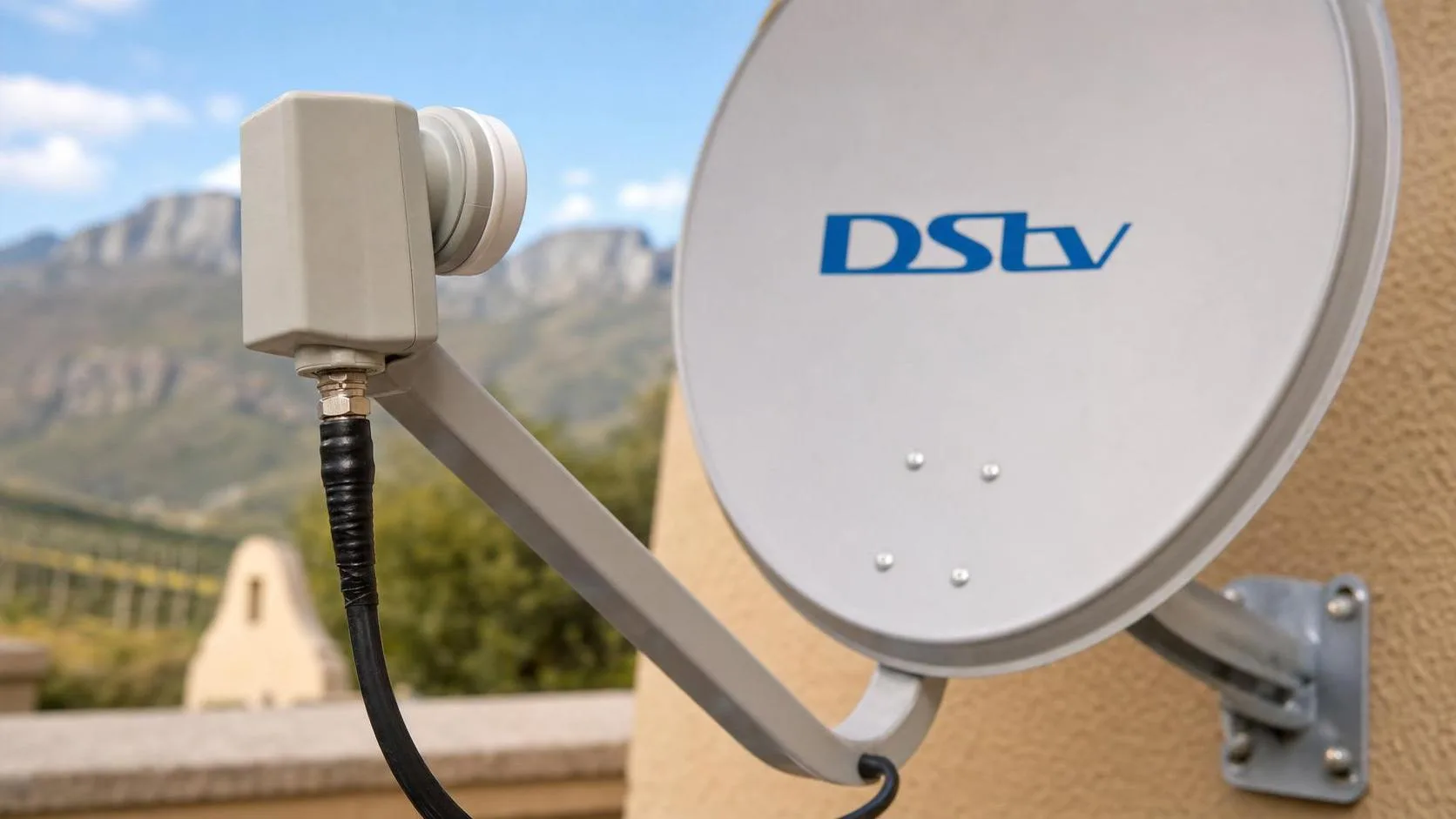
All of those are bread-and-butter for us. We bring new dishes, brackets, LNBs (including the Smart LNB needed for Explora), cable, F-connectors and weatherproofing materials on every callout, so we can complete the job in one visit rather than coming back for parts.
How we align a dish properly
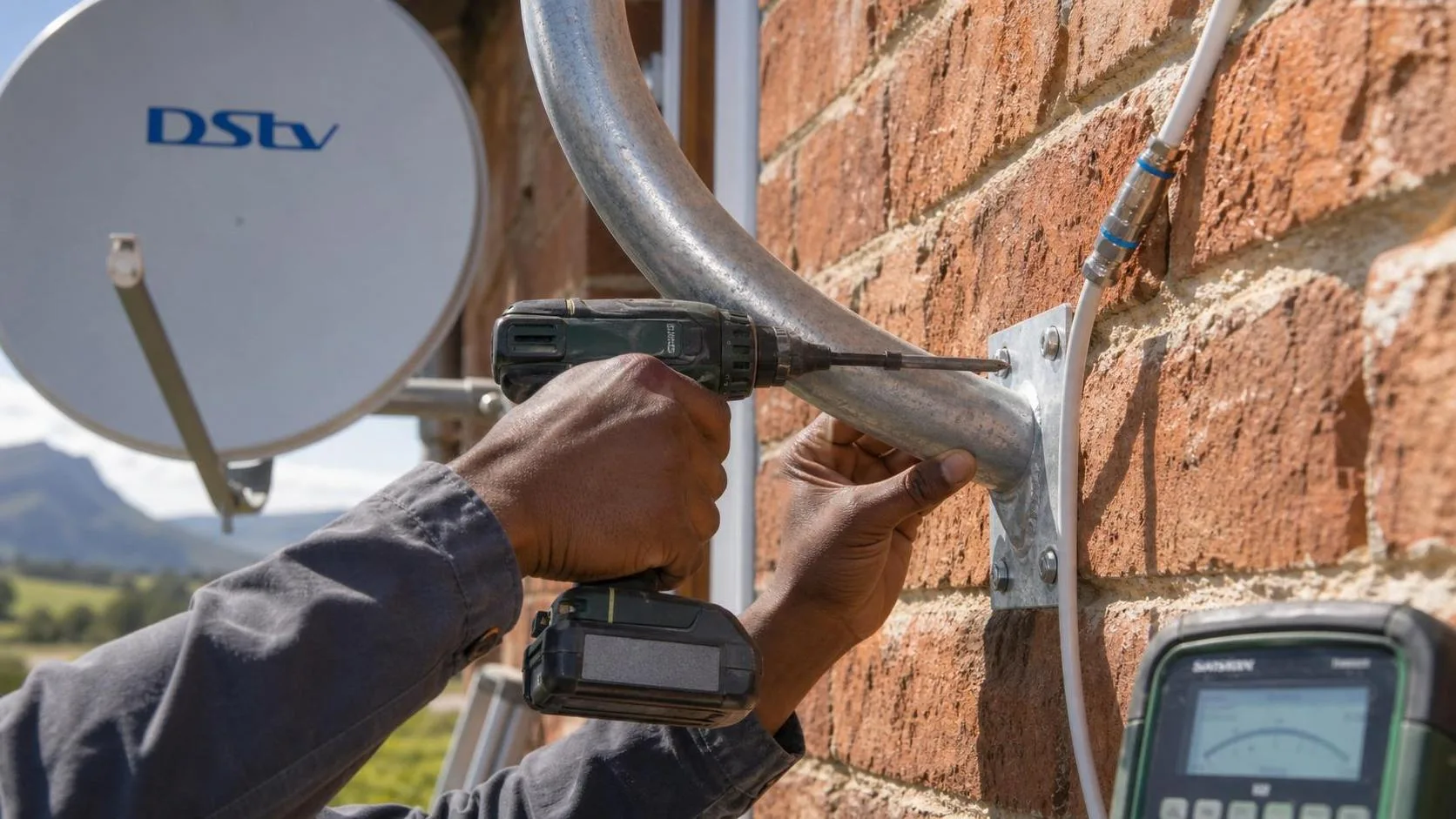
Proper dish alignment is three things: azimuth (the horizontal direction the dish points), elevation (the vertical angle), and skew (the rotation of the LNB on the arm). For DSTV in the Western Cape, the targets are precise, and a 2° error in any of them can drop signal quality from 95% to 60%, which is when you start seeing the picture freeze in mild weather. That's also one of the most common causes of the E48-32 error our repair team gets called out for.
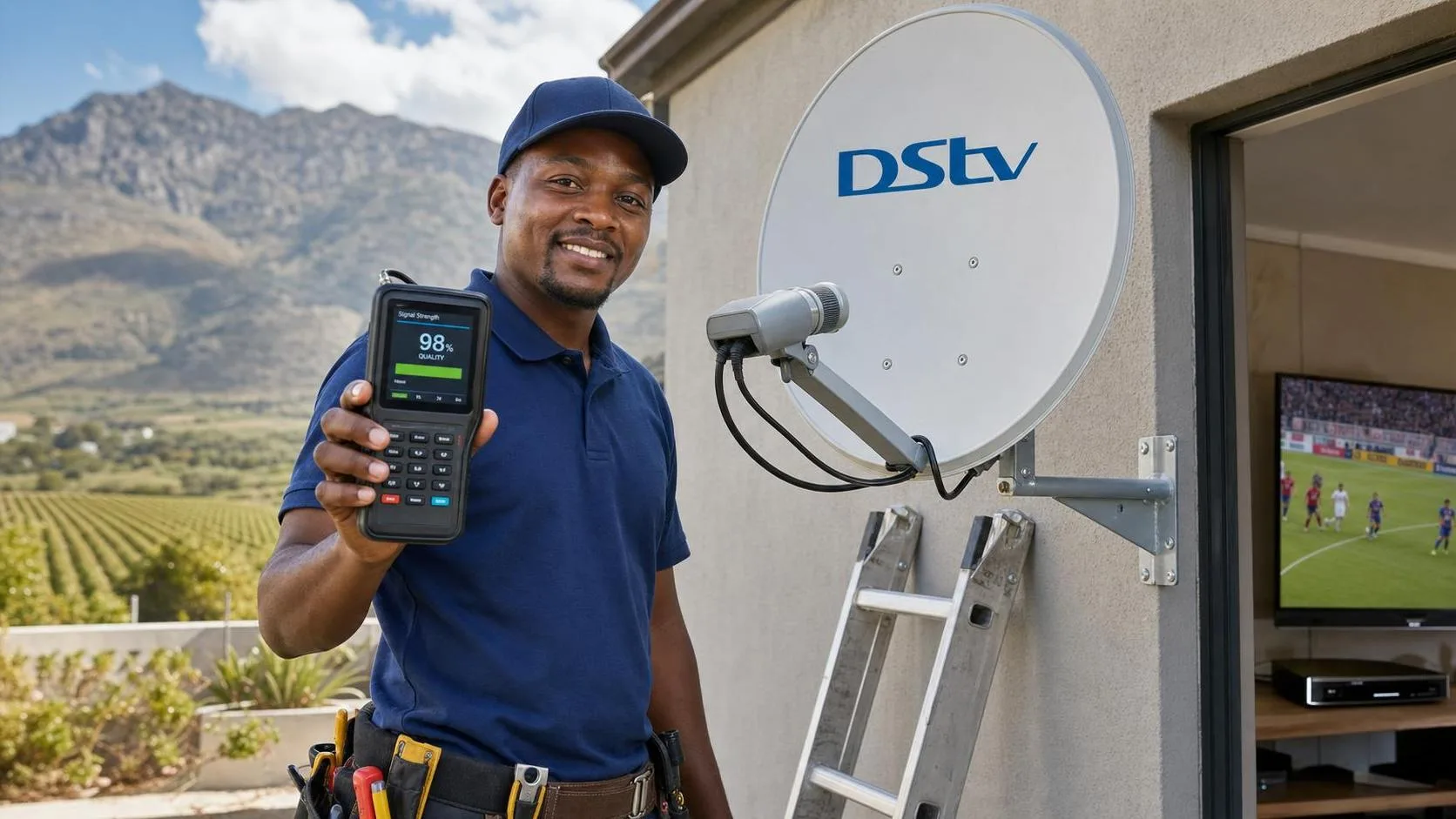
We use a calibrated satellite signal meter to align, not a guess based on the decoder's signal bar. The meter shows us real signal strength in dB and signal quality as a percentage, and we adjust until both peak. Then we tighten everything down, weatherproof the F-connectors with self-amalgamating tape, and leave you with a dish that holds its alignment through the next decade of Cape storms.
Dish positioning matters more than you think
One of the most common installation mistakes we fix is a dish that's been mounted in the only place that was convenient at the time, under a tree, behind a chimney, low down where the gutter overflows onto it, or facing the wrong satellite entirely. We always do a quick walk-around before we mount, identify the cleanest line-of-sight to the satellite arc, and propose a position that gives the best signal with the least risk of long-term problems. To book a site visit, request a free quote or WhatsApp 079 754 5527.
What's included
Every job is tested and signed off before we leave.
Get a free quote
Prices depend on equipment, TV points, cabling & access, we'll quote upfront.