If you live in Franschhoek, Wellington or anywhere in the Winelands, you’ve seen DSTV drop signal during a thunderstorm at least once. Sometimes it comes back the moment the rain eases off: other times you’re left with a frozen picture or an E48-32 error long after the weather has cleared. Here’s what’s actually happening.
1. Rain fade (the normal one)
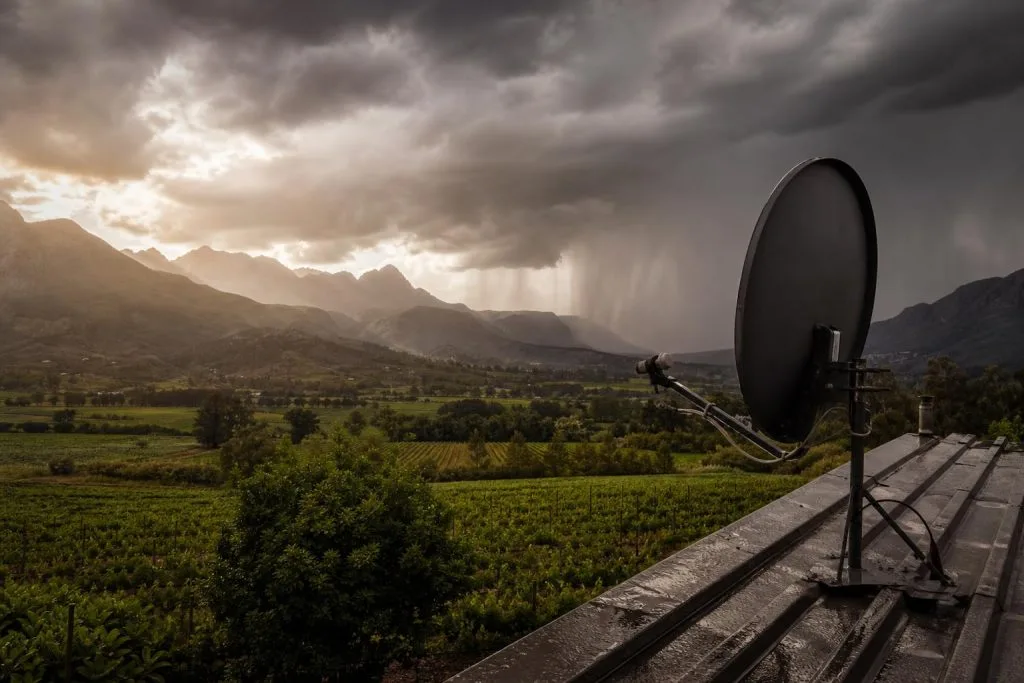
Heavy rain in the line-of-sight between your dish and the satellite absorbs and scatters the signal. This is called “rain fade” and it affects every satellite TV system on the planet: not a DSTV-specific issue and not a fault. If your signal returns as soon as the storm clears, this was the cause and there’s nothing to fix on your dish.
A correctly aligned dish on a Smart LNB usually rides through everything except the absolute worst Cape storms. If your system drops out in light to moderate rain too, your baseline signal is too weak and the dish needs realignment.
2. Dish has been physically moved by wind
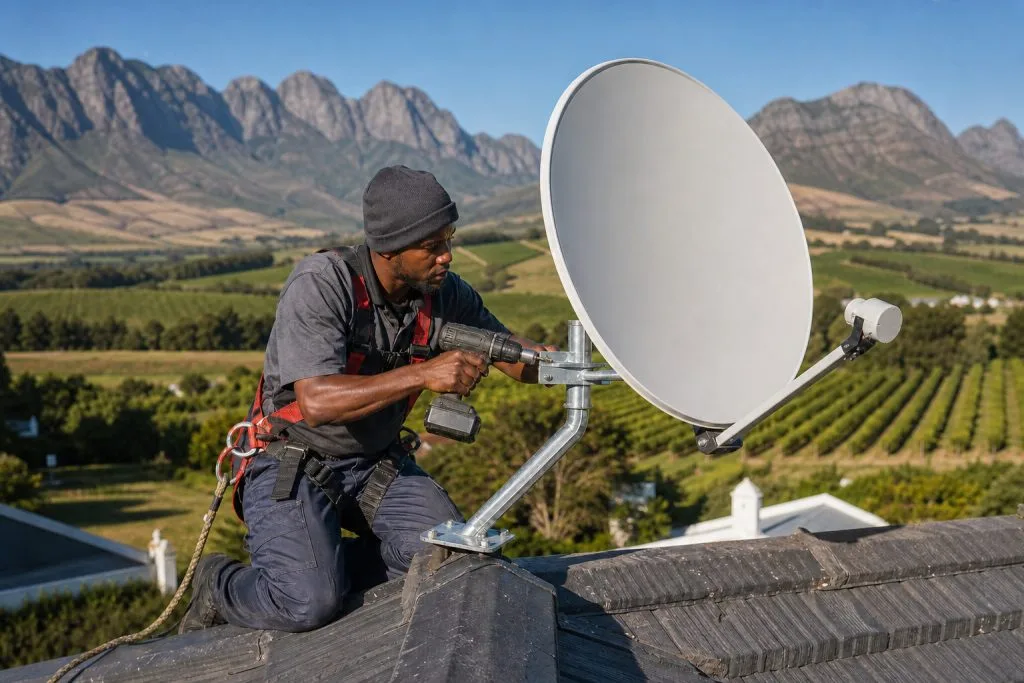
The Winelands gets serious wind, especially through the gaps between Simonsberg and the Drakenstein. A dish that’s been mounted with cheap brackets or has lost a fixing can shift by 2–3°, which is more than enough to drop signal quality below the lock threshold. Symptoms: signal comes back partially after the storm but never as strong as before.
Fix: professional realignment with a calibrated meter (see what dish installation and alignment costs), plus tightening or replacing brackets if they’ve loosened.
3. Water has reached the LNB or cable
The most insidious storm damage isn’t the dish moving: it’s water getting in. A poorly weatherproofed F-connector at the LNB lets rainwater run down the cable, corroding the connector and eventually the LNB itself. You’ll see signal degrade week by week after a big storm even though the rain has long stopped.
Fix: replace the F-connectors, reseal with self-amalgamating tape, and replace the LNB if corrosion has reached the unit, a job for the signal repair team.
4. The fault was waiting to happen
Sometimes a storm doesn’t cause the problem: it exposes one that was already brewing. A cable with UV cracking, an LNB that’s been weak for months, brackets that were never tightened properly, or a wall-plate connector that’s come loose. The first big storm of the season pushes the system from “just working” to “stopped working”.
Fix: a proper diagnostic walk-through of the whole system rather than just patching the visible problem.
What you can try before calling
- Wait 10 minutes: if the signal comes back, it was rain fade and you don’t need a technician.
- Look at the dish from the ground: obvious lean, debris, or a bracket hanging loose means it shifted in the wind.
- Power-cycle the decoder at the wall for 60 seconds.
- Check the cable where it enters the wall: if water has come down it, that’s your issue.
If signal hasn’t returned within 30 minutes of clear weather, or if it’s back but the picture freezes regularly, you have a hardware fault that needs a technician. Same-day urgent callouts across the Winelands: WhatsApp 079 754 5527 with the error code on screen and we’ll get you back on air. Full details: DSTV signal repairs.
Related troubleshooting guides
- DSTV Error E30-2 & No Signal When It Rains: Causes and Fixes
- DSTV Picture Freezing or Pixelating? Here’s How to Fix It
- DSTV Error E16: What It Means and How to Fix It
Related DSTV Troubleshooting Guides
After a big storm, our signal repair service realigns dishes across the Winelands.
Based in Franschhoek or the surrounding Winelands? If your DStv has stopped working rather than never worked, we diagnose the actual fault on site before quoting the fix. See our DStv signal repairs in Franschhoek, or start at our Franschhoek DStv team for everything we cover across the valley. Call 079 754 5527 or request a free quote.
Need a DSTV technician?
Same-day DSTV installation, signal repair and Explora setup across Franschhoek and the Cape Winelands.