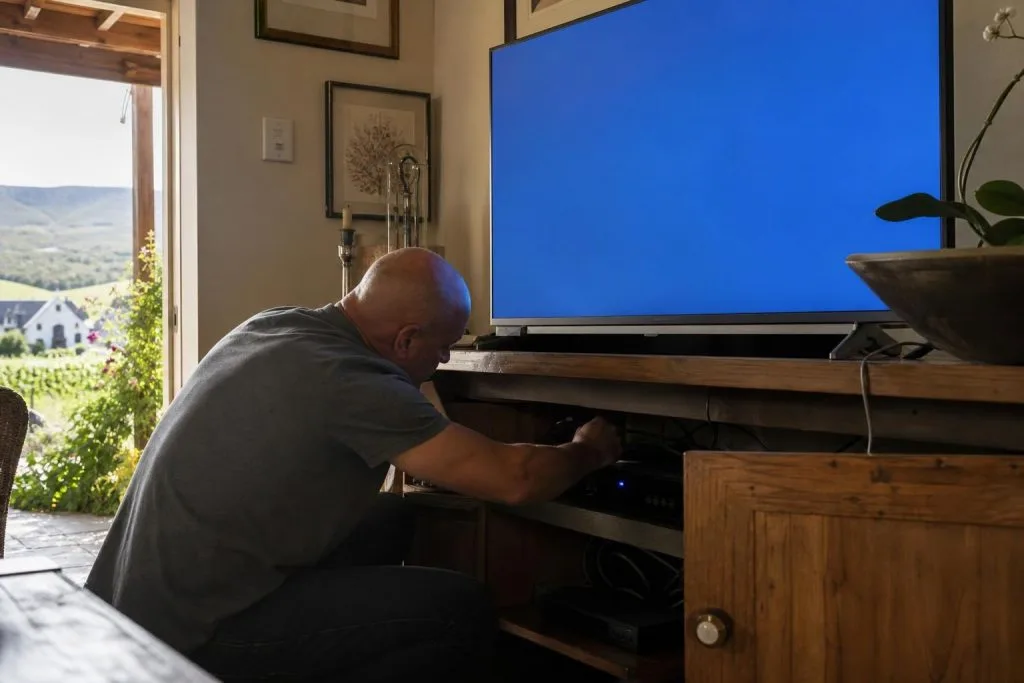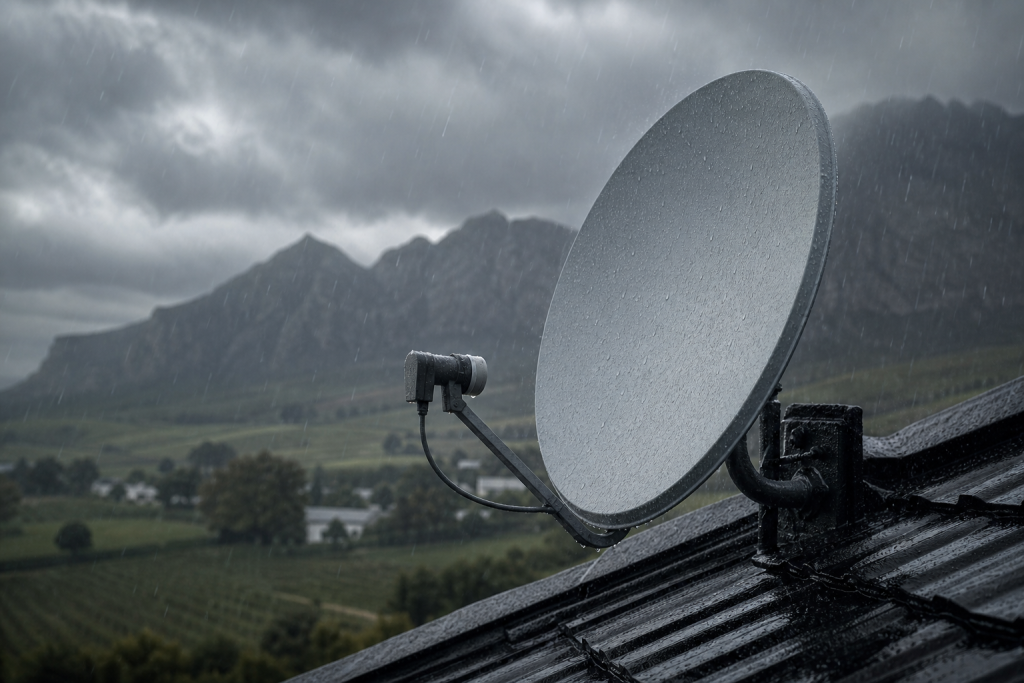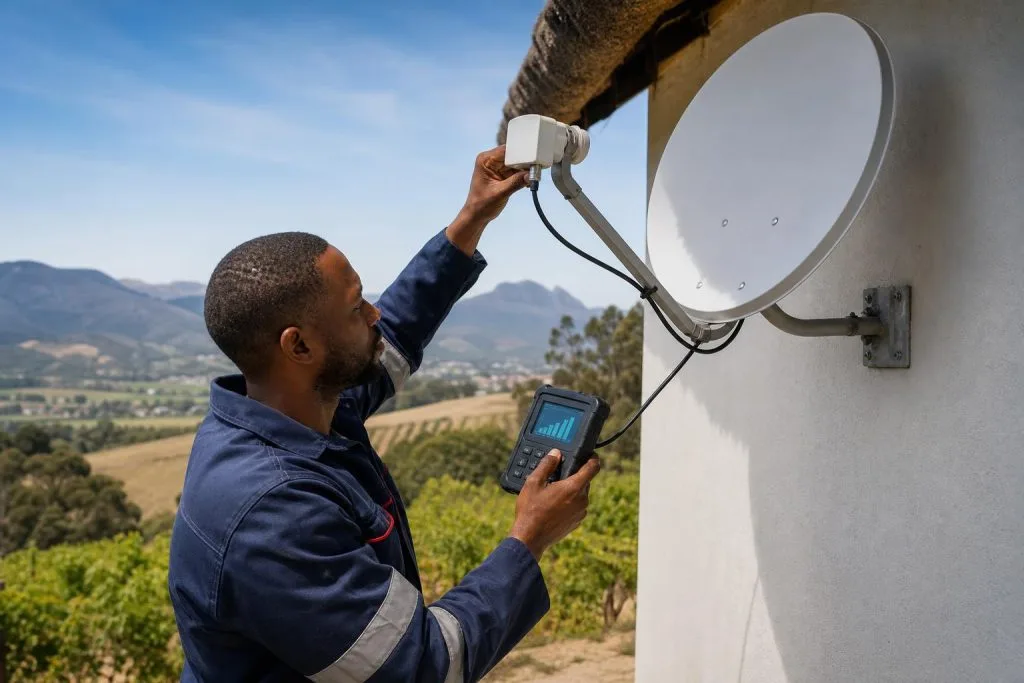
DStv signal strength and signal quality are related readings, but they do not describe the same thing. A decoder can show reasonable strength while picture breakup continues because the quality is poor. Understanding that difference helps you avoid replacing a decoder when the real problem is dish alignment, an LNB, cable loss or an outdoor connector.
What DStv signal strength measures
Signal strength broadly indicates how much satellite signal reaches the decoder. It is affected by dish size, LNB output, cable length, connector condition and losses along the route. A strong reading is useful, but strength alone does not prove that the decoder receives a clean and correctly aligned signal.
An amplified or noisy signal can look strong without being usable. That is why a technician should never finish an alignment by chasing the highest strength number alone.
What signal quality measures
Signal quality indicates how cleanly the decoder can interpret the selected satellite signal. Dish direction, elevation, LNB rotation and interference all influence it. Quality is normally the more important reading when diagnosing pixelation, missing channels or reception that fails during light rain.
A small alignment error may leave plenty of raw strength but reduce the margin needed for stable reception. Franschhoek wind can move a loose bracket slightly, while winter moisture can introduce loss at an exposed connector.
Why readings differ between channels
Channels are carried on different transponders. A fault can affect one group more than another, so testing only the channel currently displayed can miss a marginal installation. A proper assessment checks representative readings and confirms that the setup remains stable after cables and covers are returned to position.
What healthy readings should look like
There is no single percentage that guarantees every installation is healthy because decoder models, menus and signal paths differ. The goal is consistently high quality with enough weather margin, not a memorised number. Sudden changes from the installation’s normal readings are often more useful than comparing one decoder with a different model elsewhere.
- Both readings should remain stable rather than jumping continuously.
- Quality should not collapse when the cable or connector is touched gently. Our guide to decoder cables and connections explains which cable does what and where the weak points usually are.
- Multiple channel groups should be checked.
- The picture should remain stable after the final cable route is secured.
- Outdoor connections should be dry and weather-protected.
Common causes of low quality
Slight dish misalignment, an insecure mount, incorrect LNB skew, an obstructed line of sight and a distorted dish can reduce quality. Cable faults include water entry, corroded F-connectors, sharp bends, crushed sections and poor joins. An aging LNB can also fail intermittently, but it should be tested rather than replaced by guesswork.
If reception worsened after wind or rain, review our post-storm DStv checks. For recurring faults, a meter-based dish alignment assessment is safer than moving the dish while watching an on-screen bar.
Frequently asked questions
Is 100% strength enough?
No. Strong but poor-quality reception can still pixelate or lose channels. Both readings and real viewing stability matter.
Why does quality fall when it rains?
Heavy rain affects satellite signals, but failure in light rain often reveals low weather margin caused by alignment, cable loss or weak equipment.
Can a decoder cause bad readings?
It is possible, but the dish, LNB, cable and connectors should be tested first because they are common causes.
Should I adjust the dish myself?
Small movements make a large difference. If the mount is safely accessible, inspect it visually, but use a meter-trained installer for alignment.
When to book a signal test
Book testing when readings fluctuate, some channel groups disappear, picture breakup returns after temporary fixes, or bad weather repeatedly knocks out reception. Our DStv repair service in Franschhoek checks the full signal path. Call or WhatsApp 079 754 5527 with the error code and whether all decoders are affected. Regular upkeep helps too: see how often a DStv system should be serviced.
How a technician isolates the weak point
Testing should move through the system in a deliberate order. A meter reading close to the LNB establishes what the dish produces. A second reading at the decoder end shows how much is lost through the cable and connectors. If quality is poor at the dish, alignment, obstruction, dish shape or LNB setup needs attention. If it is healthy at the dish but weak indoors, the route becomes the priority.
Multi-decoder homes need each relevant feed checked. One damaged output or cable can affect a single room while the primary decoder remains perfect. Record readings after the repair so later changes can be compared with a known baseline.
If your readings stay low after these checks, our DStv signal repair and installation service in Franschhoek can realign the dish or replace faulty hardware.
Readings still poor? Our DStv signal repair service diagnoses and fixes it same-day.
If your quality reading is low no matter what you try, it needs a meter and a trained eye. Our signal repair service in Franschhoek diagnoses properly instead of replacing parts on guesswork.
Need a DSTV technician?
Same-day DSTV installation, signal repair and Explora setup across Franschhoek and the Cape Winelands.