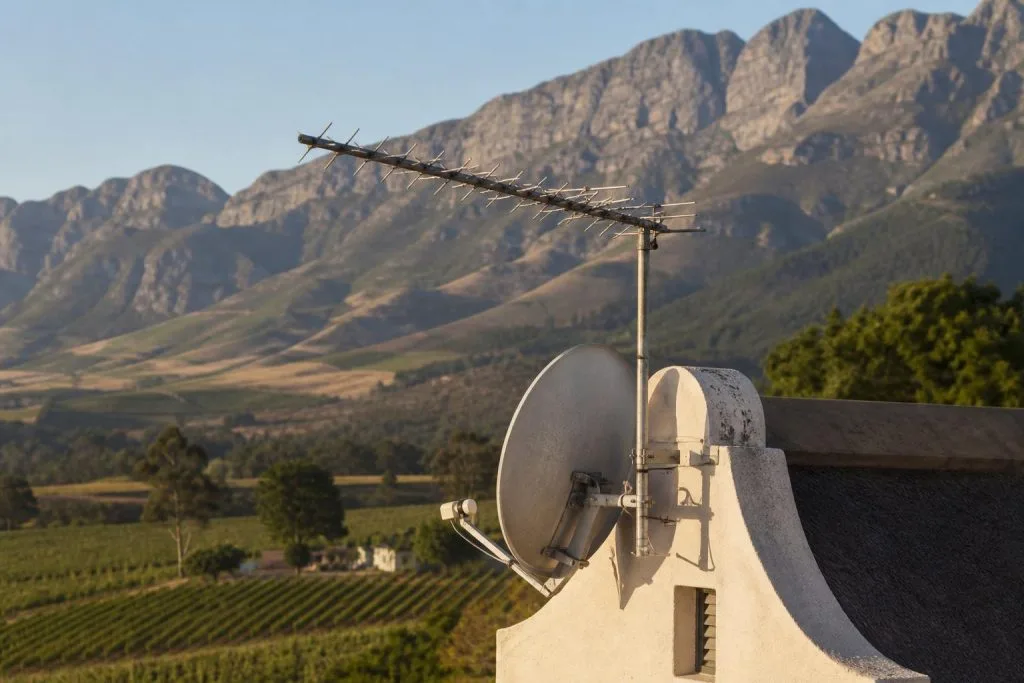
A TV aerial and satellite dish are not interchangeable antennas. They receive different broadcasts, point in different ways and connect to different equipment. Choosing correctly starts with the channels or platform you want, not with whichever bracket is already on the roof.
What a TV aerial receives
A terrestrial TV aerial receives broadcasts transmitted from land-based towers. Its type, direction and installation height depend on local coverage and terrain. The television or approved terrestrial decoder must support the relevant broadcast standard.
An aerial can provide selected free-to-air terrestrial services where coverage is available. Channel availability and reception vary by location, so check current official coverage information before installation.
What a satellite dish receives
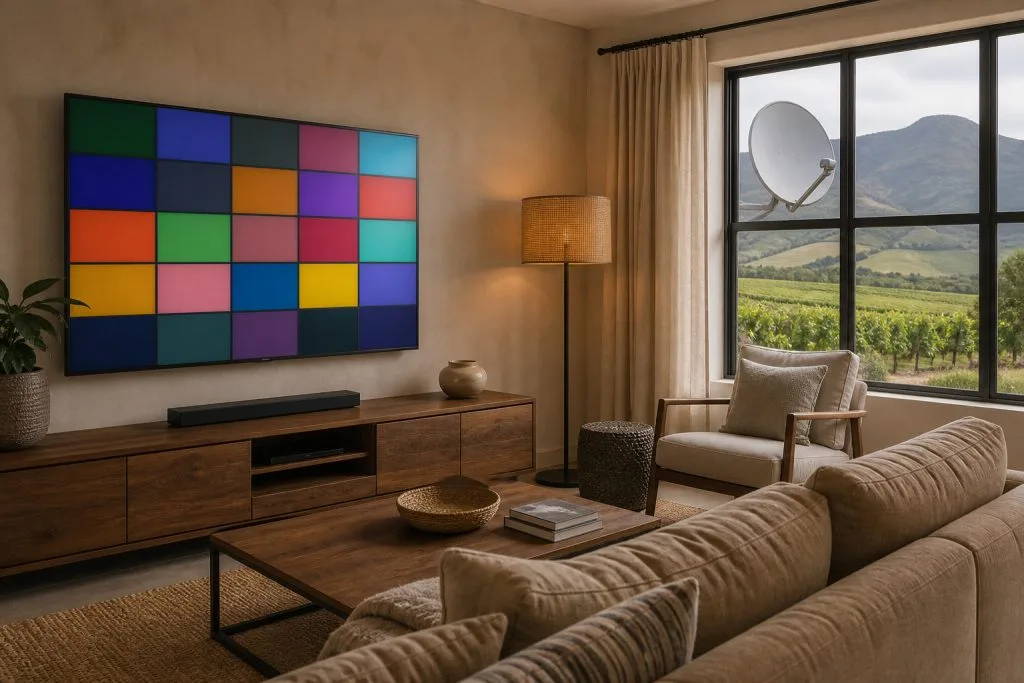
A satellite dish reflects signals from a satellite into an LNB mounted on the dish arm. The LNB feeds a compatible satellite decoder through coaxial cable. DStv and OpenView use satellite systems, but they require their own approved decoders and compatible installation arrangements.
The dish needs accurate direction, elevation and LNB setup. A rough visual alignment is not enough for reliable weather margin.
Equipment differences
Terrestrial systems use a suitable aerial, mast or bracket, terrestrial coaxial path and a compatible tuner or decoder. Satellite systems use a dish, LNB, satellite-grade coaxial cable, F-connectors and a platform-specific decoder. Although both may use round coaxial cable, the signal and control requirements differ.
Do not connect or split feeds simply because connectors appear similar. A passive splitter suitable for one terrestrial arrangement can disrupt a satellite feed.
Channel and cost considerations
Choose the platform based on must-have channels and ongoing budget. DStv offers subscription packages, OpenView focuses on free-to-view satellite channels after setup, and terrestrial options depend on current local broadcasts. Check official channel lists because they change over time.
Installation cost depends on existing equipment, roof access, cable distance and condition. Reusing an old cable without testing can make a cheaper quotation more expensive through repeat faults.
Can one property use both?
Yes. A home, guesthouse or communal property can use terrestrial and satellite systems when distribution is planned correctly. Separate feeds may serve different televisions, or managed equipment may distribute selected services. Label cables and keep the systems understandable for future maintenance.
Reception problems differ
Aerial reception can be affected by transmitter coverage, terrain, building obstruction, aerial direction and local interference. Satellite reception depends on line of sight to the satellite, dish alignment, LNB condition and cable quality. Weather can expose a marginal satellite installation, while local terrain can make terrestrial reception uneven between nearby properties.
Frequently asked questions
Can a satellite dish receive normal aerial TV?
No. The dish and LNB are designed for satellite frequencies and require suitable satellite equipment.
Can an aerial cable be reused for a dish?
Only if the cable type, condition and route meet the satellite system’s requirements. Testing is essential.
Does a smart TV remove the need for an aerial or dish?
A smart TV can stream through internet apps, but terrestrial and satellite broadcasts still need their relevant receiving equipment.
Which works better during internet outages?
Broadcast reception does not rely on the internet for its core live signal, although connected features and account functions may.
Choose the service first, then design the reception system
Write down the channels, rooms and budget before buying hardware. For terrestrial reception, see our TV aerial installation service. For satellite options, compare OpenView and DStv or arrange a dish assessment. Call 079 754 5527 for Franschhoek installation help.
Planning several televisions
Multiple rooms change the design. Terrestrial signals may be distributed through suitable splitters or amplifiers after levels are measured, while satellite decoders need feeds and control arrangements that match the selected platform. Adding splitters without calculating loss can create weak reception in every room.
For guesthouses and communal properties, decide whether rooms need independent channel choice or a centrally selected service. This determines decoder count, cabling and ongoing account requirements. Document the distribution system so a future television replacement does not disturb the head-end equipment.
Whichever route suits your home, our aerial and DStv installers in Franschhoek install and repair both.
For crystal-clear terrestrial channels, our TV aerial installation service handles aerials too.
Need a DSTV technician?
Same-day DSTV installation, signal repair and Explora setup across Franschhoek and the Cape Winelands.