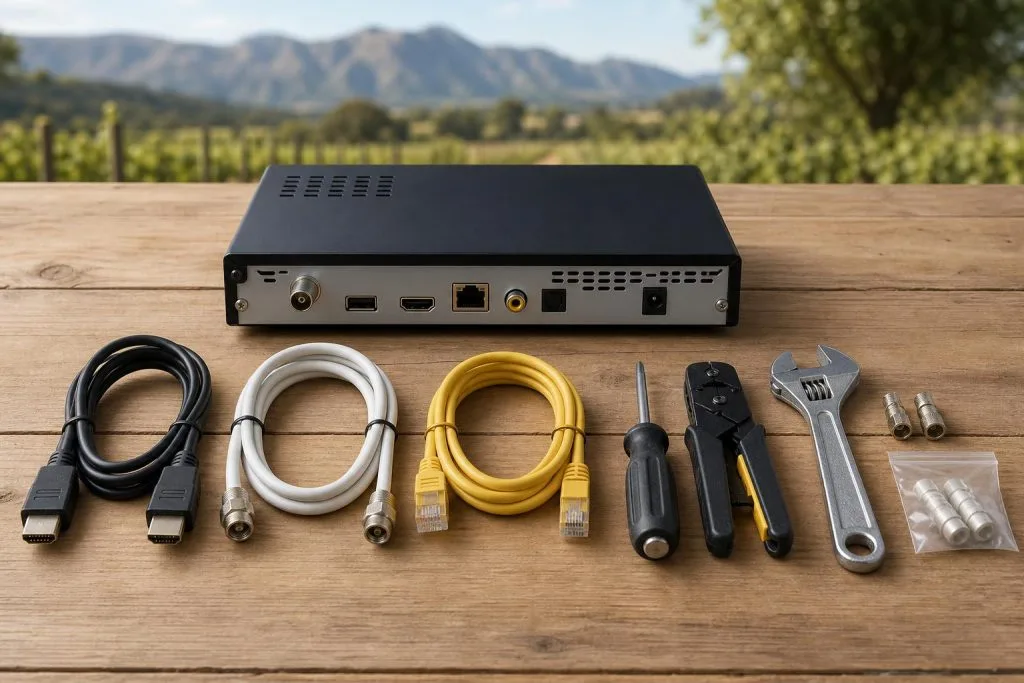
The main OpenView installation requirements are an approved decoder, suitable satellite dish and LNB, sound coaxial cable, clear line of sight, accurate alignment and activation. An existing DStv dish may sometimes be reused, but only after its condition and compatibility are checked.
Can an existing DStv dish be reused?
A dish is not permanently tied to the logo on the decoder. If its size, bracket and condition are suitable, it may form part of an OpenView setup. However, the required satellite position, LNB arrangement and existing services must be considered before anything is moved.
If DStv still works at the property, do not realign its dish casually. Changing it for OpenView can disconnect the existing service. A separate dish or properly planned arrangement may be the better solution when both platforms are needed.
Dish condition and mounting
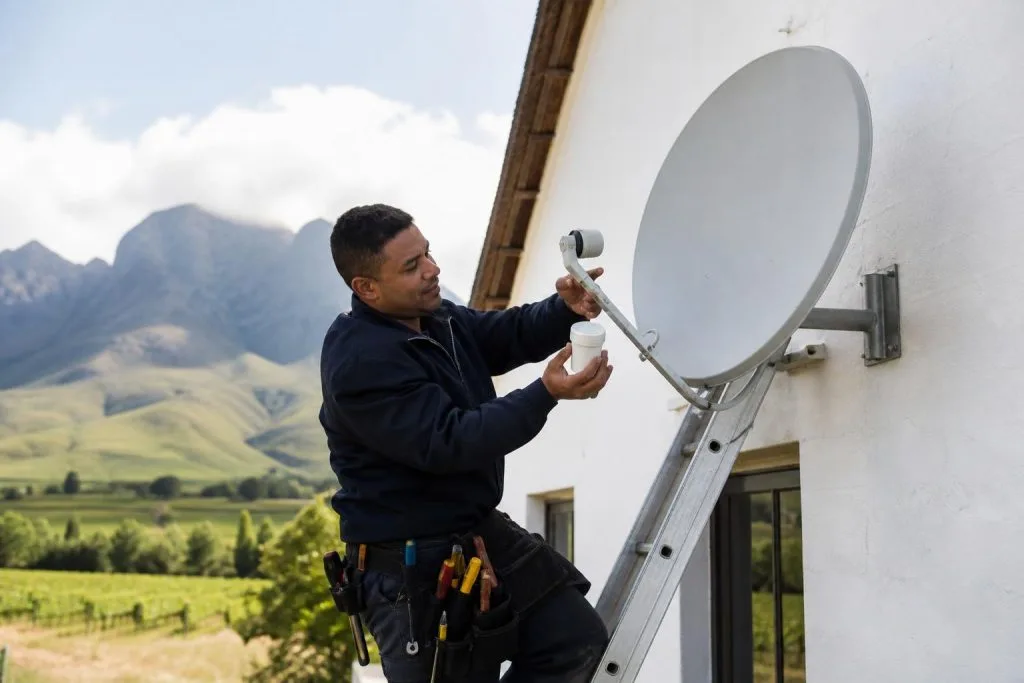
The reflector should not be warped, badly rusted or loose on its bracket. The mount needs solid fixing and clear line of sight. Trees, new structures and seasonal vegetation can obstruct a dish that worked years ago. Franschhoek wind also exposes weak wall fixings and poles.
A meter should be used for alignment. Watching a picture while nudging the dish does not show whether enough weather margin remains.
LNB and cable requirements
The LNB must suit the planned OpenView connection and remain dry and securely mounted. Coaxial cable should be proper 75-ohm satellite cable with clean F-connectors. Replace water-damaged, crushed or heavily joined sections rather than building a new installation on a marginal route.
If reusing cable, test signal at both the dish and decoder ends. This reveals loss that is invisible during a visual inspection.
Decoder, HDMI and activation
Use an approved OpenView decoder and follow the current activation instructions. Connect the satellite feed to the correct input and HDMI to a matching television source. Activation cannot compensate for poor signal, so reception should be stable first.
Keep decoder and account details available. If the decoder receives signal but activation fails, use the official OpenView support path rather than changing dish alignment.
What a standard assessment should confirm
- Clear satellite line of sight.
- Secure dish and bracket.
- Compatible LNB and correct output.
- Dry, tested cable and connectors.
- Safe route into the television room.
- Stable signal and completed decoder activation.
Frequently asked questions
Can I plug an OpenView decoder into any DStv cable?
Not automatically. The dish alignment, LNB output and cable condition must match the OpenView setup.
Do I need internet for OpenView satellite channels?
The satellite signal is received through the dish, not WiFi. Check current requirements for any additional connected features.
Can a small old dish be used?
It depends on size, condition and the required installation. Assessment is safer than assuming it will provide stable weather margin.
Why are only some channels available?
Possible causes include activation, alignment, LNB, cable or current channel availability. Diagnose the stage before replacing equipment.
Plan before reusing old hardware
Reusing sound equipment can reduce waste and cost, but reusing damaged equipment causes repeat faults. Compare OpenView versus DStv, then book our OpenView installation service in Franschhoek if you need the existing dish tested. Call 079 754 5527.
When a separate dish is the cleaner option
A separate dish may be sensible when DStv must remain active, existing outputs are fully used, the old equipment is difficult to verify, or the cable routes serve different parts of the property. Keeping services independent can make later troubleshooting easier and prevents an adjustment for one platform from interrupting the other.
The installer should still choose a safe, visually sensible position and avoid unnecessary roof penetrations. On older Franschhoek buildings, discuss cable appearance and fixing surfaces before drilling. A neat route planned in advance is better than concealing a rushed cable after installation.
Want the conversion done right first time? Our DStv and OpenView installers in Franschhoek convert and align dishes for both services.
To reuse your DStv dish for OpenView properly, book our OpenView installation service.
Reusing an existing dish is often possible, and it saves real money. Our dish alignment service in Franschhoek will check whether yours is sound before anyone suggests replacing it.
Need a DSTV technician?
Same-day DSTV installation, signal repair and Explora setup across Franschhoek and the Cape Winelands.